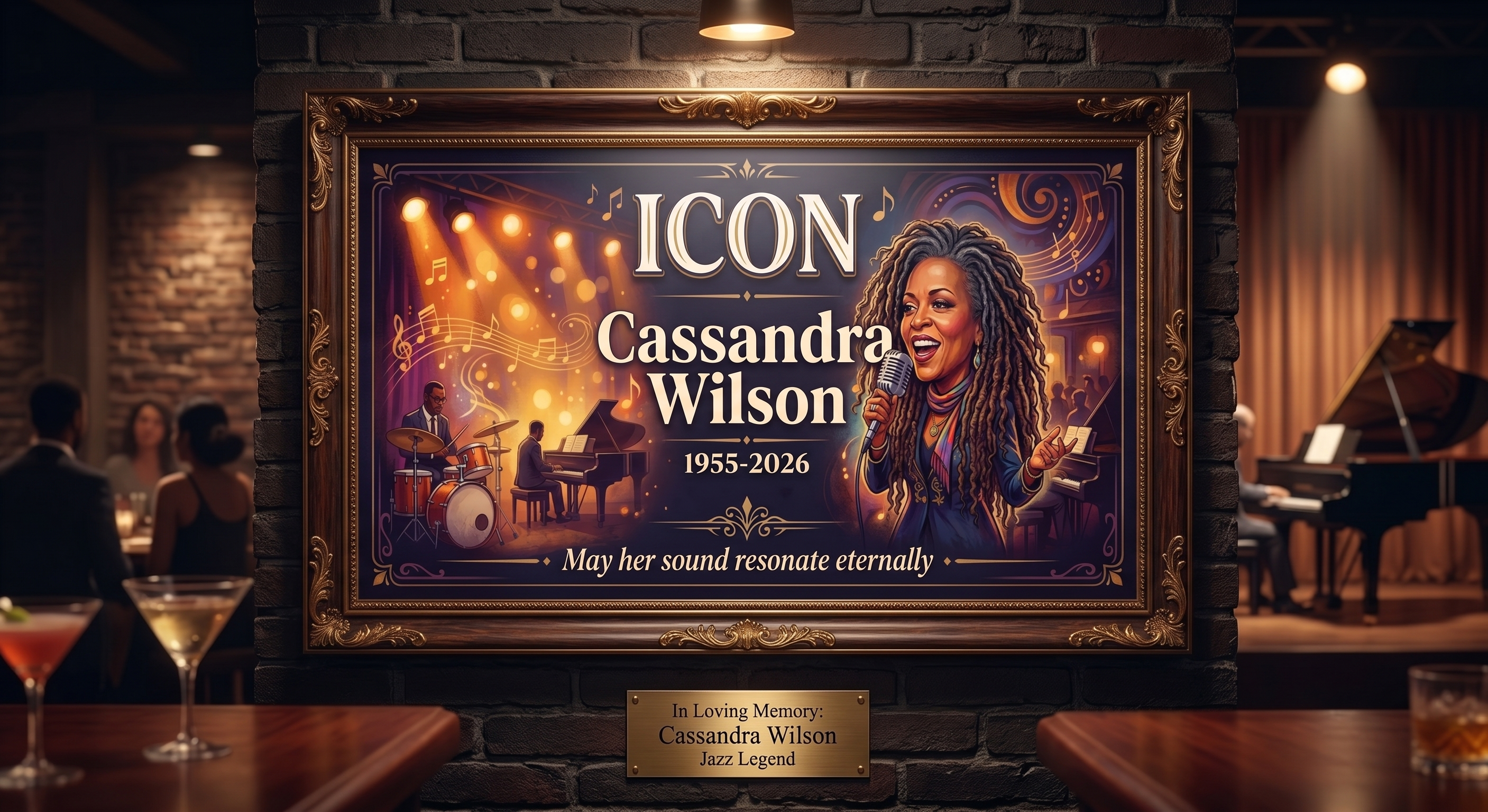
A Force of Nature: Remembering Cassandra Wilson
She will be missed.
Cassandra Wilson passed on, on September 1, 2026, at her home in Jackson, Mississippi, surrounded by family. She was 70. Time magazine once called her America's best singer. Wilson didn't just sing well, she rebuilt what a jazz vocalist was allowed to do with a song, and then spent four decades proving there was no ceiling on it.
The virtuoso, the voice, God's instrument
Jazz singers were long expected to work almost entirely inside the Great American Songbook. Wilson didn't reject that tradition so much as widen it past recognition — reaching for Joni Mitchell, Neil Young, and Van Morrison with the same seriousness she brought to standards, and reaching just as naturally toward Delta blues, recording hypnotic, stripped-down versions of Robert Johnson and Son House. Born in Jackson to a musician father and a teacher mother, she carried that Mississippi foundation with her through everything that came after, no matter how far the arrangements wandered from it.
Blue Note era: Blue Light 'Til Dawn (1993) and the Grammy-winning New Moon Daughter (1995) traded big bands and pianos for steel guitars, banjos, accordions, and African percussion — a real reinvention of jazz instrumentation.
M-Base Collective: co-founded alongside saxophonist Steve Coleman in the 1980s, fusing avant-garde jazz with funk and hip-hop years before that kind of genre-crossing was common.
Recognition: two Grammy wins for Best Jazz Vocal Album (New Moon Daughter, 1997; Loverly, 2009), and a 2022 NEA Jazz Master honor — one of the highest distinctions available to a jazz musician in the United States.
Final act: her last album, Coming Forth by Day (2015), was a direct homage to Billie Holiday, released around a concert Wilson gave at the Apollo Theater marking what would have been Holiday's 100th birthday.
"Time After Time," from 1999's Traveling Miles — Wilson's self-produced homage to Miles Davis, who'd recorded his own version of the Cyndi Lauper song years earlier. She slowed it down, dropped it into her register, and found something in it neither the original nor Davis' cover had reached.
Wilson called herself a musician before she'd call herself a jazz singer — she arranged and produced her own records, and treated the vocalist's chair as a bandleader's seat, not a spotlight handed to her by someone else's arrangement. That stance shaped a real lineage: threads of her phrasing and genre-blending spirit run through the neo-soul movement that followed her, and directly through vocalists like Lizz Wright and Gretchen Parlato, who inherited the same permission Wilson gave herself first — sing whatever the song requires, as long as you mean it.
Bob Dylan, whose own "Lay Lady Lay" she reworked on 2003's Glamoured, put it plainly once: "I love everything she does." That's the whole review, from someone with no reason to be generous about a cover of his own song. She earned it anyway — on that track, and on nearly everything else she touched.